How to Clean a Burnt-On Le Creuset Pot Without Scratching It
As an Amazon Associate we earn from qualifying purchases. Some links on this page are affiliate links, which means we may earn a small commission if you make a purchase.
Enamel’s constraint is simple: any scratch is permanent. The goal when cleaning a burnt Le Creuset isn’t just removing residue—it’s doing so without altering the delicate glass surface that makes these pans so durable. That black crust welded to the base after a long simmer is carbonised food, not a death sentence for your expensive cookware. This guide outlines a sequence that lifts burnt layers safely, protecting the enamel from the hairline scratches that turn a pan into a food-trapping nightmare.
Gathering Your Tools
Before starting, assemble the right equipment. Metal or abrasive tools may scratch or damage the enamel, so stick to wooden or plastic implements for heavy lifting.
A wooden spatula or heat-proof plastic scraper (paid link)See on Amazon provides the necessary leverage. For stubborn patches, a soft nylon pad is as far as you should go on enamel; chainmail and metal scrubbers are not for this surface.
For cleaning products, Bar Keepers Friend is one possible option for stubborn marks, but check its instructions and Le Creuset’s care guidance first. It requires careful use. The Pink Stuff serves as a budget alternative for baked-on residue, though it can leave a chalky film if not rinsed thoroughly.
Bicarbonate of soda works as a gentle abrasive that loosens carbon without harsh chemicals. It prepares the ground before stronger options.
Don’t forget a heat-proof glove or oven cloth. The first cleaning step involves returning the pot to the hob.
Need a reminder of the essentials? Download the Free Pan Rescue First-Steps Checklist to see what to gather before starting.
The Rescue Process
Most cleaning guides skip the crucial first step: deglazing. Soaking methods alone may not penetrate genuinely carbonised crusts. Heating and soaking may help loosen the residue effectively.
Cooling and Deglazing
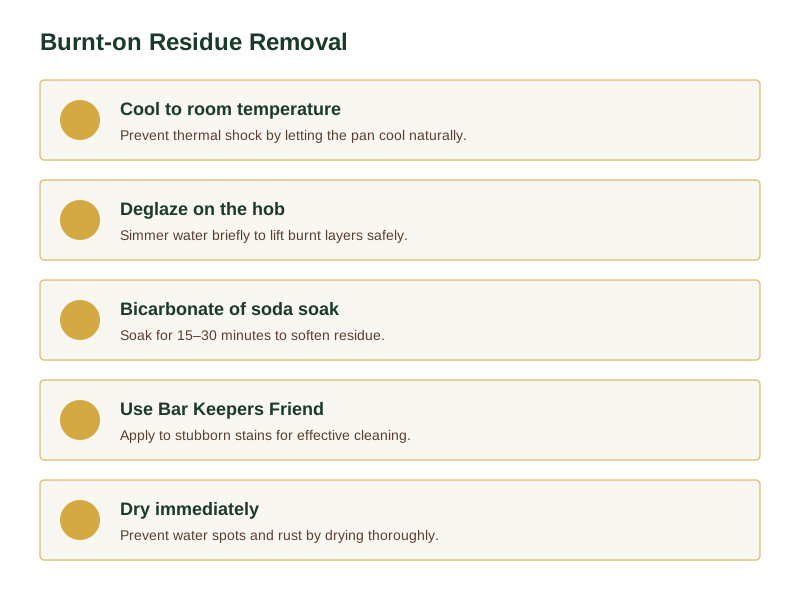
Allow the pot to cool naturally to room temperature. Placing a hot pan under cold water risks thermal shock, which can crack the enamel.
Once cool, set the pot on a low to medium heat. Add enough water to cover the base—about a centimetre. Bring to a gentle boil and let it bubble for two to three minutes, scraping the bottom with a wooden spatula (paid link)See on Amazon. This process rehydrates the starch-protein matrix fusing the burnt food to the enamel. It’s the same technique chefs use to release fond after searing.
Soaking and Gentle Scrubbing
Remove from heat. Add washing-up liquid and a couple of tablespoons of bicarbonate of soda (paid link)See on Amazon, then fill with boiling water from the kettle. Soak for about 15 to 20 minutes, repeating if needed.
Scrub with a non-abrasive sponge using circular motions. A plastic pan scraper can lift loosened food without risking enamel damage. Rinse well.
Addressing Stubborn Stains
If marks remain, consider a specialist cleaner cautiously. Apply a small amount to a damp sponge, work into the stain, and let it sit for a minute or two without drying completely. Scrub gently and rinse thoroughly. Always test on a hidden area first.
Drying Properly
Dry the pot immediately with a clean tea towel. Thorough drying prevents water spots. Once dry, store with the lid slightly ajar to improve ventilation.
The deglazing step often makes the difference between needing one cleaning round or two.
Recognising When to Stop Cleaning
Sometimes cleaning isn’t the solution. While a burnt Le Creuset may still be salvageable if the enamel is intact, physical damage changes everything.
📺 Watch: EASY-ish Le Creuset Cleaning | Work Smart, Not Hard
Marks on the interior may be staining or damage; inspect the enamel and consult Le Creuset if unsure. Orange-brown discolouration could indicate rust. If rust appears, follow Le Creuset’s rust-care instructions and contact the maker if enamel is chipped or the cause is unclear.
The real limits are physical: chips, cracks, or flaking enamel constitute material failure. If you find a chip during cleaning, stop scrubbing around it and assess structural soundness. Flaking enamel or a warped base means the pot has reached the end of its useful life.
If your pot is beyond saving, the maker will tell you what they cover, and a replacement is the honest answer.
UK Considerations
Le Creuset cookware works on various hobs, but always heat gradually and avoid sudden temperature changes as recommended by the manufacturer.
Hard water can leave mineral deposits. To remove scale, use methods approved by Le Creuset, typically warm soapy water and soft tools.
If disposal is necessary, check your local council or recycling centre for accepted options rather than sending enamelled cast iron to landfill.
Frequently Asked Questions
Can I put my Le Creuset in the dishwasher?
Le Creuset recommends hand-washing to preserve the enamel finish. While some listings describe pots as dishwasher safe, check the maker’s care page for specific guidance.
Will Bar Keepers Friend damage my Le Creuset?
Le Creuset advises avoiding abrasive cleaning agents. For enamel care, their recommended method is warm soapy water and a soft nylon sponge.
Can I use oven cleaner on Le Creuset?
Avoid oven cleaner unless Le Creuset specifically approves it. Stick to the methods outlined in this guide.
How do I remove rust from Le Creuset?
For exterior rust, Le Creuset recommends using a nylon sponge with washing-up liquid, followed by thorough drying and a light oiling. For interior rust, consult product-specific guidance.
What is the best way to store Le Creuset?
Store clean and thoroughly dry; leaving the lid slightly ajar may improve ventilation. When stacking, use pan protectors to prevent handle marks on enamel surfaces.
When selecting a cleaning approach, deglazing on the hob is a low-abrasion method best for loosening carbonised food and takes 2–3 minutes. A bicarbonate of soda soak is also low-abrasion and suitable for general burnt-on residue, requiring 15–30 minutes. A specialist cleaner offers a medium level of abrasiveness for stubborn stains and takes 2–5 minutes. Steel wool is not recommended for enamel due to its high abrasiveness.
Maintaining Your Cookware
The sequence is clear: cool, deglaze, soak, scrub, dry. That burnt Le Creuset on your worktop is likely salvageable with careful attention. The exceptions—chips, cracks, or warping—are usually apparent upon inspection.
A well-cared-for Le Creuset can provide long service. Pair each safe method with the right tool: a soft sponge for gentle cleaning, a wooden scraper for lifting residue, a nylon brush for detailed work. Then consult the care guide for daily maintenance routines.
Keep the steps handy for future mishaps—Download the Free Pan Rescue First-Steps Checklist for quick reference.
Related Guides
For comprehensive care information, see Looking After Enamelled Cast Iron: The Le Creuset and Staub Care Guide .
Sources & Further Reading
- How to save your burnt Le Creuset in 20 minutes with just one product
- How to Clean Your Cast Iron Casserole | Le Creuset UK
- Care & Use | Le Creuset UK
As an Amazon Associate we earn from qualifying purchases. The products linked above are ones we think are worth a look.
Note: General guidance only, verify details with a qualified professional or official source.