Looking After Enamelled Cast Iron: The Le Creuset and Staub Care Guide
As an Amazon Associate we earn from qualifying purchases. Some links on this page are affiliate links, which means we may earn a small commission if you make a purchase.
The two biggest threats to your enamelled cast iron aren’t burnt-on food—they’re thermal shock from sudden temperature changes and abrasive impact on the enamel surface. Getting the cleaning routine right means avoiding both. That dark stain on your Le Creuset’s base after a tomato sauce mishap may be burnt-on residue rather than damage, provided the enamel is intact. The real danger comes from reaching for aggressive tools that scratch the glass-like coating.
Enamelled cast iron is remarkably durable. The fired-on enamel seals the iron from rust and reacts safely with acidic ingredients, unlike bare cast iron. You don’t need to season it—the factory coating provides the cooking surface. But this toughness has limits. Chipped enamel or deep scratches compromise the pan’s integrity, and using methods designed for stainless steel can cause permanent harm.
Understanding the Material
Unlike raw cast iron that requires regular oiling, enamelled cast iron comes ready to use. The glass-ceramic coating is fused to the iron at high temperatures, creating a non-reactive surface that works on all hob types including induction. You can use metal utensils cautiously, though wood or silicone are gentler choices.
The weight is significant, which evens out heat but makes a drop costly. That heft ensures even heat distribution and retention, contributing to decades of service with proper care.
A common error is treating enamelled cast iron like a Lodge skillet. Attempting to season it with oil creates a sticky surface that attracts food residue. The enamel doesn’t require seasoning, and oil on the exterior can carbonise and become difficult to remove.
Daily Care vs. Tough Stains
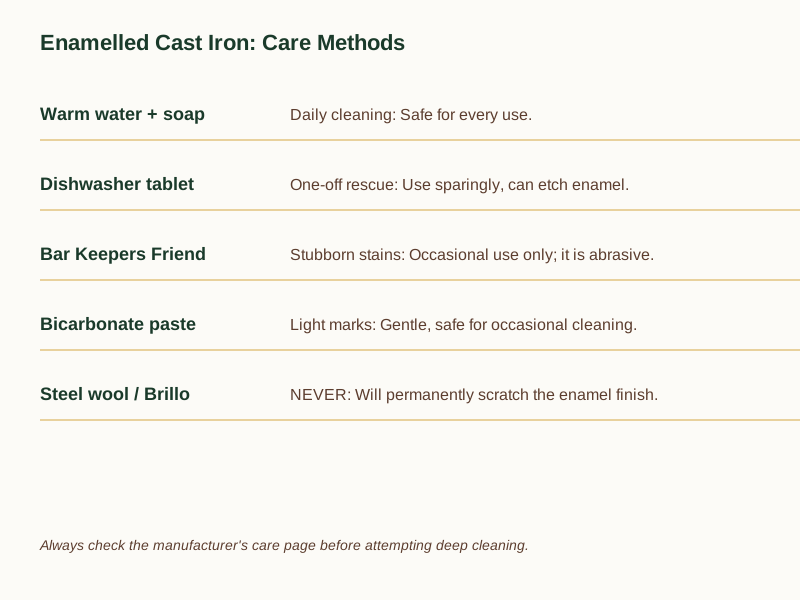
For everyday cleaning after normal use, warm water with washing-up liquid and a soft sponge or washing-up brush (paid link)See on Amazon suffices. The smooth enamel surface cleans easily without special products or techniques.
📺 Watch: Enameled Cast Iron | How to CHOOSE, CARE FOR and COOK With It!
When dealing with burnt-on residue, a different approach is needed. While some sources suggest using a dishwasher tablet as a one-off treatment for severe burning, repeated exposure to strong dishwasher detergents may dull the enamel finish. Manufacturer guidance recommends hand washing as the standard practice.
The distinction is clear: mild soap and water for regular cleaning, with stronger methods reserved for occasional tough jobs. If you frequently encounter stubborn burnt-on residue, consider adjusting your cooking technique—perhaps lowering the heat or increasing liquid content.
Bar Keepers Friend can tackle stubborn stains but requires careful use with a soft cloth due to its mild abrasiveness. For lighter discolouration, a paste of bicarbonate of soda (paid link)See on Amazon and water offers a gentler, though slower, alternative.
Essential Cleaning Tools
Your tool selection matters more than the cleaning product. A plastic pan scraper (paid link)See on Amazon effectively lifts softened food without scratching. Pair it with a nylon brush or soft sponge for most cleaning tasks.
Avoid steel wool, Brillo pads, and harsh scouring creams—these can create micro-scratches in the enamel where food particles lodge, making future cleaning more difficult. Once the enamel surface is scratched, the damage is permanent.
Temperature management is equally important. Never plunge a hot pan into cold water, as the thermal shock can crack the enamel or cause it to separate from the iron base. Allow the pan to cool to warm before cleaning, or use warm rinse water. This is particularly relevant for induction hobs where surfaces reach high temperatures.
If purchasing tools, a good nylon brush and plastic scraper provide excellent value compared to specialised products. Chainmail scrubbers, while excellent for raw cast iron, are unnecessarily abrasive for enamel surfaces.
Recognising When Repair Isn’t Possible
Sometimes cleaning isn’t the solution. If the enamel has chipped—exposing bare iron that will rust—or shows flaking, bubbling, or deep cracks, the pan may be beyond salvaging. A small chip on the exterior rim might not affect cooking, but interior damage warrants caution. Consult manufacturer guidelines for warranty coverage.
Cosmetic issues like staining, dullness from harsh cleaning, or light surface scratches affect appearance more than function. A pan with intact enamel will still perform well, though you might try gentle polishing if the appearance bothers you.
Common Questions Answered
Can I put my enamelled cast iron in the dishwasher?
Manufacturers generally recommend hand washing. While occasional dishwasher use may not cause visible damage, regular exposure to alkaline detergents can dull the enamel’s shine over time. Hand washing remains the recommended practice.
How do I remove burnt food from the bottom of my casserole?
Begin by soaking the pan in warm water with washing-up liquid for several hours or overnight. Once residue softens, use a plastic scraper or nylon brush. For persistent stains, some household methods suggest a one-off dishwasher tablet treatment, though manufacturer guidance emphasises gentle soaking and soft tools. Avoid abrasive scourers that could scratch the surface.
Is metal utensil use safe with enamelled cast iron?
The enamel withstands metal utensils better than bare iron, but metal utensils may scratch enamel if scraped or used carelessly. Wooden, silicone, or plastic utensils are recommended to preserve the surface and prevent micro-scratches that increase food sticking.
Maintaining Your Investment
Most enamel stains are superficial and respond to patient, gentle cleaning rather than aggressive methods. Good habits prevent most issues: adequate cooking liquid, moderate heat settings, thorough drying, and regular soap-and-water cleaning.
The essential care routine forms a simple loop: clean thoroughly after use, dry completely, and store properly to avoid chips and scratches. For detailed storage guidance to protect your investment, see our guide on storing Le Creuset and enamel cookware without damage .
If your pan shows wear, assess the actual damage before deciding it’s unusable. Most issues are manageable with the correct approach.
Download the Free Pan Rescue First-Steps Checklist to have the right cleaning approach handy for your next kitchen challenge.
Related Reading
- Looking After Enamelled Cast Iron: Questions Answered
- How to Clean a Burnt-On Le Creuset Pot Without Scratching It
- Why Is the Inside of My Le Creuset Pot Brown or Rough?
- Chipped Enamel on a Le Creuset: What the Manufacturer Says About Using It
- How to Remove Rust From Le Creuset Rims Without Damaging the Enamel
- How to Remove Stains From Enamel Cookware Using What You Already Have
Sources & Further Reading
- Care & Use | Le Creuset UK
- How to Care for and Clean Enameled Cast Iron | Le Creuset®
- How to Clean and Care for Enameled Cast Iron
Note: General guidance only, verify details with a qualified professional or official source.