How to Remove Rust From Le Creuset Rims Without Damaging the Enamel
As an Amazon Associate we earn from qualifying purchases. Some links on this page are affiliate links, which means we may earn a small commission if you make a purchase.
The rim of a Le Creuset pot is uncoated cast iron, not enamel. This is by design—the manufacturing process leaves the rim with a thin enamel primer rather than the full coating found on the cooking surface. Under normal kitchen conditions, this area will rust if moisture remains after washing. Understanding this shifts the problem from one of damage to one of maintenance.
Understanding Rim Rust
Le Creuset rims are sealed with a thin enamel primer, which can develop rust if moisture lingers or if the primer becomes chipped. This is the only part of the pot where the underlying iron is so close to the surface. Oxidation occurs when water sits on this area, a natural process for any iron left damp.
📺 Watch: 3 Ways to Clean a Le Creuset Dutch Oven
Le Creuset commonly attributes rim rust to inadequate drying, damp storage, or a damaged primer. It’s not typically a manufacturing fault but a maintenance issue. Surface rust on the rim is usually removable. If left unchecked, it can spread beneath the enamel edge, turning a simple clean into a repair job.
Brown or orange discolouration indicates rust. Black, raised residue is more likely burnt carbon from cooking. White or chalky marks often come from hard water. Each requires a different approach; using the wrong treatment can cause damage.
Safe Rust Removal Steps
Follow this sequence to clean the rim effectively.
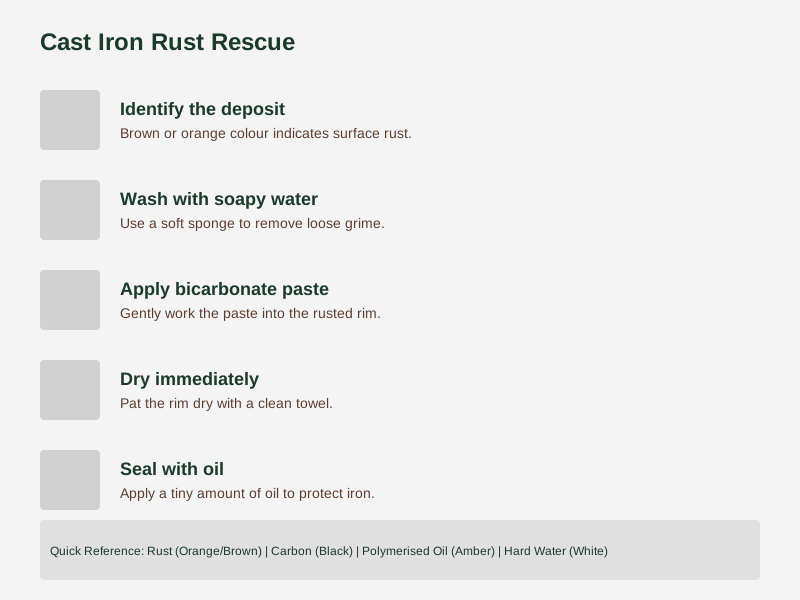
- Identify the deposit first. Brown or orange suggests rust. A rough, flaky texture might indicate enamel damage rather than a surface deposit. Test a small area if you’re uncertain.
- Wash the cool pan. Use warm water and washing-up liquid with a soft nylon sponge. This clears loose grime so the cleaning agent can work directly on the rust.
- Apply a gentle cleaner. A baking-soda paste may help with light surface residue. Mix bicarbonate of soda with water to form a thick paste. Apply it to the rim with a soft cloth, using gentle circular motions. Rinse thoroughly with warm water after a minute. For confirmed safety, follow Le Creuset’s official guidance to use a nylon sponge and washing-up liquid.
- Dry immediately and completely. Pat the rim dry with a clean towel right after rinsing. Do not let it air-dry.
- Apply a protective oil. Rub a tiny amount of sunflower or vegetable oil onto the clean, dry rim and buff it with a cloth. This helps create a seal and may reduce the chance of rust returning.
You’ll need bicarbonate of soda (paid link)See on Amazon, soft cloths, vegetable oil, and a towel—all common household items. The crucial, often-missed step is the final application of oil.
Get the Free Pan Rescue First-Steps Checklist to help prevent rust from recurring.
Common Mistakes to Avoid
Using the wrong method can cause permanent harm. Steer clear of these approaches.
- Abrasive metal tools: Avoid steel wool, metal scourers, or chainmail scrubbers. These can scratch the enamel edge, creating traps for future rust. Use a nylon sponge instead.
- Vinegar and harsh acids: Le Creuset advises against using harsh chemical cleaners on enamel surfaces. Avoid vinegar soaks, as the acidity could potentially damage the enamel interface.
- Abrasive powders: Use caution with powdered cleaners like Bar Keepers Friend on the rim. They might be too abrasive unless the label confirms they are safe for enamel. Test on a hidden spot first.
- Misidentifying the deposit: Black, crusty carbon deposit won’t respond to a baking-soda paste. A plastic scraper (paid link)See on Amazon after soaking is more effective. See our guide on burnt pan bottoms for more detail.
The rim is a transition zone between materials and needs careful handling.
Assessing Enamel Damage
Surface rust is treatable; compromised enamel is not. A baking-soda paste removes rust but cannot fix a damaged coating.
Stop if you see flaking, bubbling, or deep cracks in the enamel alongside rust. This indicates the protective layer has failed, exposing the iron beneath. Household methods won’t reverse this.
A simple test: if the rim remains rough or pitted after gentle cleaning, the enamel is likely damaged. Surface rust leaves a smooth finish once removed.
For older, heavily used pans, the expense of professional servicing might approach the cost of a new pan. For newer or sentimentally valuable pieces, contact Le Creuset about their service options before deciding. If you’re unsure about the extent of damage, contact Le Creuset’s service team—incorrect cleaning can worsen the problem.
Not every damaged pot is beyond help, but some are. Our article on when to replace a pan offers more guidance.
Quick Answers to Common Queries
Is my Le Creuset dishwasher-safe?
Many Le Creuset cast-iron pieces are technically dishwasher-safe, but the manufacturer recommends hand washing to preserve the finish. Hand drying is particularly important for the rim, as dishwashers can leave residual moisture that leads to rust if the pot is stored before being completely dry.
How can I stop the rust returning?
Keep the rim protected. Dry it thoroughly after every wash. Applying a small amount of oil periodically, as Le Creuset suggests, helps maintain a barrier. If rust persists, check for a chip or scratch in the primer that’s allowing deeper moisture penetration.
What does rust on the cooking surface mean?
Rust on the internal cooking surface is more serious than rim rust and warrants stopping use. Contact Le Creuset for product-specific advice, as this may indicate coating failure.
Identifying Rim Deposits
When identifying deposits, note that orange or brown rust is smooth when clean and responds to a gentle cleaning paste, followed by thorough drying and oiling. Black, raised or crusty residue is likely burnt carbon and is best removed with a plastic scraper after soaking. Amber, tacky deposits are polymerised oil and can be cleaned with warm soapy water, while white or chalky, powdery marks are from hard water and should be treated according to Le Creuset’s guidance for mineral deposits.
Keeping Your Pot Rust-Free
That orange ring is a maintenance issue, not a disaster. Surface rust on the rim responds to a simple clean, a thorough dry, and a light oil application. The method is straightforward and uses items you likely have on hand.
The key is to act early and avoid aggressive tools. Abrasive metal scrubbers and acidic cleaners risk permanent damage.
Once the rim is clean and sealed, focus on prevention. The single most effective habit is to dry the pot upside-down on a rack after washing, ensuring no moisture is trapped. Download the Free Pan Rescue First-Steps Checklist for the drying and oiling routine that prevents recurrence, plus signs of enamel wear.
Further Reading
For comprehensive storage and care information, our Looking After Enamelled Cast Iron: The Le Creuset and Staub Care Guide has full details.
Sources & Further Reading
- Frequently Asked Questions | Le Creuset UK
- Care & Use | Le Creuset UK
- How to Clean Le Creuset Pan - Sous Chef
Note: General guidance only, verify details with a qualified professional or official source.