What to Use to Scrub a Burnt Pan: Scourers, Scrapers and Brushes Compared
As an Amazon Associate we earn from qualifying purchases. Some links on this page are affiliate links, which means we may earn a small commission if you make a purchase.
Kitchen scourers are classified by their abrasiveness, typically measured on scales like the Mohs hardness or industry-specific classifications. Stainless steel cookware sits around 5.5-6.3 on the Mohs scale, enamel coatings at approximately 6-7, and non-stick PTFE coatings at a much softer 1.5-2. This hardness hierarchy dictates the fundamental rule: your cleaning tool should never be harder than your cookware’s surface.
The wrong choice turns a simple cleaning job into permanent damage. Understanding where your pan material falls on this scale is the first step to choosing a safe, effective scrubber.
Our Pick
- Bare cast iron or stainless with burnt-on carbon? A chainmail scrubber lifts it when the maker allows it: Cuisinel chainmail scrubber Check the Cuisinel chainmail scrubber on Amazon → (paid link)
- Non-stick, enamel or aluminium? A plastic scraper or soft nylon sponge lifts residue without marking the surface: WLLHYF plastic pan scrapers Check the WLLHYF plastic pan scrapers on Amazon → (paid link)
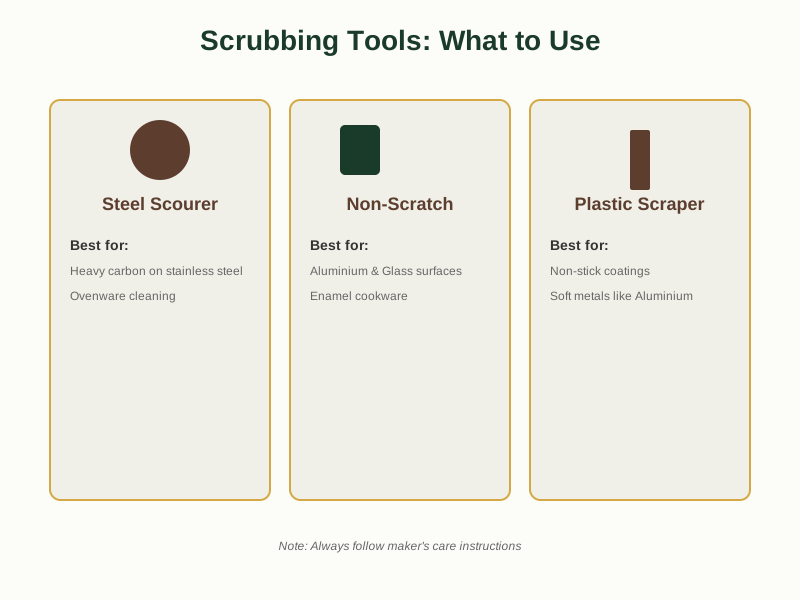
Steel scourers: assessing the risk
Steel scourers are aggressive tools designed for heavy-duty cleaning. While sometimes used on robust surfaces, their application requires careful consideration of manufacturer guidelines.
📺 Watch: The Best Way To Clean Stainless Steel Pans!
Tefal, for instance, explicitly advises against using steel wool, steel brushes, or scratchy cleaners on its polished stainless steel cookware. For a roasting tray or ovenware that the manufacturer confirms can withstand abrasives, a steel scourer might tackle concrete-like carbon. But this power comes with significant risk for most everyday cookware.
The classic error is assuming a “hard” non-stick pan can tolerate steel. It cannot—the coating will be stripped in a single pass. Even on materials like stainless steel, an unapproved steel scourer can leave permanent scratches.
Important: Always check your cookware’s care instructions before using any metal scourer. What works on one brand’s stainless steel might ruin another’s finish.
The case for non-scratch pads
For materials that demand a gentler approach, non-scratch scourers offer a safer alternative. These are often the recommended choice for aluminium and glass cookware when the manufacturer approves their use.
After a bicarbonate of soda soak has loosened the bond, a manufacturer-approved non-scratch pad can provide the needed friction. For enamel pots, brands like Le Creuset recommend scratch-proof or non-stick pads specifically to avoid damage, making them a sensible follow-up to chemical treatments.
While not aggressive enough for years of built-up grease on steel, they serve as a reliable option for most daily cleaning tasks when matched correctly to the surface.
High-performance sponges: deceptive abrasiveness
High-performance scrub sponges combine an abrasive layer with a soft foam base, making them effective on greasy, baked-on crusts. Their perceived softness, however, can be misleading.
Despite feeling less harsh than steel wool, the abrasive side can still scratch delicate surfaces. Tefal warns that scouring pads can damage non-stick coatings, and Le Creuset advises against abrasive cleaners on enamel. They can be useful for stainless steel grill pans, but using them on a glass stovetop or non-stick surface is a gamble. Their durability is another concern, as the abrasive layer often separates from the sponge after limited heavy use.
The secret to a rescued pan isn’t how hard you scrub, but choosing a tool your cookware’s manufacturer deems safe.
Matching tool to material
The right tool is entirely dependent on your pan’s material. Using an inappropriate tool is the fastest route from rescue to rubbish.
- Stainless Steel: Opinions vary on the “best” tool. Some find a chainmail scrubber effective on certain finishes, but always defer to manufacturer guidance. Tefal recommends a sponge or soft scourer for burnt pans, not aggressive metals.
- Aluminium: Avoid metal scourers. Tefal states that metal accessories and scouring sponges can scratch this softer metal. A plastic scraper or nylon brush are safer options, subject to the maker’s instructions.
- Non-Stick: A plastic scraper is one option, but Tefal’s guidance points to soaking followed by a soft nylon or non-abrasive sponge as the primary safe method.
- Cast Iron: A stiff brush or a chainmail scrubber may work for some, but be aware that aggressive scrubbing can affect the seasoning, potentially requiring re-oiling.
Unsure which tool is approved for your pan? Download the Free Pan Rescue First-Steps Checklist for a guided approach to safe cleaning.
Recognising when replacement is the only option
Cleaning removes food residue; it cannot fix structural failure. If scrubbing yields no improvement, look for these signs that the pan is beyond saving:
First, inspect non-stick coatings. Peeling, flaking, or deep scratches exposing the metal substrate mean the pan’s functional life is over.
Second, check enamel. Le Creuset advises that damage to the enamel coating should be avoided. A deep chip on the cooking surface may compromise the pan’s integrity and warrants checking the manufacturer’s advice on continued use.
Finally, examine the base. Warping from extreme heat that causes wobbling on a hob will impair heating performance. At this stage, the effort to clean an ineffective pan often outweighs its value.
Remember: Cleaning can remove burnt food, but it cannot repair structural damage like a warped base or deep enamel chips.
Your scrubber questions answered
Can I use steel wool on a non-stick pan?
No. Manufacturer guidance is unanimous: steel wool will destroy non-stick coatings. Stick to a plastic scraper or the soft sponge recommended by the pan’s maker.
What is the best tool for burnt-on lasagna?
For a stainless steel pan, soaking followed by a soft sponge or non-abrasive scourer is the manufacturer-recommended starting point. For a non-stick pan, a long soak in warm, soapy water followed by a soft nylon or non-abrasive sponge is the safe approach.
Will a scourer scratch my enamel pot?
It depends. Le Creuset advises against metal sponges and abrasive cleaners. A scourer labelled as scratch-proof by the cookware manufacturer is the safer choice for enamel.
Can I use a scourer on aluminium?
Avoid steel or highly abrasive scourers, as Tefal confirms they can scratch aluminium. A plastic scraper or nylon brush are considered safer alternatives.
Cookware and tool compatibility
| Material | Safer Tool Options | Key Consideration |
|---|---|---|
| Stainless Steel | Soft Sponge, Non-abrasive Scourer | Always follow manufacturer guidance; some forbid metal scourers. |
| Aluminium | Plastic Scraper, Nylon Brush | Softer metal gouges easily; avoid metal tools. |
| Non-Stick | Soft Nylon Sponge, Plastic Scraper | Anything abrasive risks stripping the coating. |
| Cast Iron | Stiff Brush, Chainmail Scrubber | Aggressive scrubbing may affect seasoning. |
| Enamel | Manufacturer-Approved Scratch-Proof Pad | Avoid metal sponges and abrasive cleaners. |
| Glass | Glass-Surface Approved Cleaner and Pad | Use only products deemed safe for the surface. |
| Ovenware | Check Manufacturer Instructions | Suitability depends entirely on the material. |
Making the right choice
There is no universal miracle tool. The key to saving a pan is matching the scourer’s hardness to the pan material’s tolerance—and never exceeding it. Starting with a soak and the gentlest tool recommended by the manufacturer is rarely a mistake. Starting with an aggressive scourer without checking can lead to an immediate trip to the shops.
Most pans that look ruined are simply dirty. By selecting the right tool, you keep cookware in use and out of landfill.
Your tool-selection rule is simple: match the scourer hardness to the pan material, never exceed it. Now that you have the right tool, Download the Free Pan Rescue First-Steps Checklist for the cleaning sequence. For detailed method guidance once the tool is chosen, see our main guide.
Related Guides
For a complete overview, see our How to Clean a Burnt Pan: Stainless Steel, Aluminium and Pots .
Sources & Further Reading
- How to clean a burnt pan | Bosch UK
- How to Clean a Burnt Pan: easy Methods That Actually Work
- Marigold Scrub Away Heavy Duty Scourer
Note: General guidance only, verify details with a qualified professional or official source.