Can You Use Washing-Up Liquid on Cast Iron?
As an Amazon Associate we earn from qualifying purchases. Some links on this page are affiliate links, which means we may earn a small commission if you make a purchase.
Whether your cast iron pan can handle washing-up liquid depends entirely on the state of its seasoning. A fully cured, stable polymerised oil layer will withstand brief contact with diluted detergent without harm. However, if the seasoning is fresh, tacky, flaking, or has just been stripped, even mild soap can interfere with the bonding process or accelerate deterioration.
The real question isn’t about the soap itself, but about the resilience of your pan’s protective surface. Understanding this distinction transforms the cleaning routine from a set of rigid prohibitions into a matter of practical assessment.
Understanding Seasoning Resilience
Seasoning is created when oil is heated to a point where it polymerises, forming a hard, slick coating bonded to the iron. This isn’t a layer of grease that can be washed away; it’s a chemical transformation. The strength of this bond determines how the surface will respond to cleaning agents.
A well-established seasoning layer, built up over many uses, is remarkably durable. It can handle warm water with a small amount of modern washing-up liquid because the surfactants in these products are designed to lift food residues and oils, not break down cured polymer bonds. The risk emerges when the seasoning is compromised. Newly applied oil that hasn’t fully cured remains vulnerable, and damaged areas expose the raw iron beneath, which is prone to rust.
The key is to match your cleaning method to the condition of your pan. A robustly seasoned piece can be cleaned confidently with soap, while a pan in a more delicate state requires a gentler approach, perhaps using just hot water and a soft brush.
What Actually Damages Cast Iron
With the soap question clarified, the real threats come into focus. Damage typically occurs through moisture, physical abrasion, or thermal stress.
📺 Watch: Your Grandmother’s Cast Iron Deserves This
Rust is the most common issue. Moisture left on bare iron leads to oxidation. This is why thorough drying is non-negotiable, far more critical than the choice of cleaning agent. Even a thin, unnoticed film of water can cause spots of rust to appear, especially on thinner areas of seasoning around the edges of the cooking surface.
Abrasive cleaning tools pose a direct physical threat. Steel wool or harsh scouring pads can scratch and remove the seasoning layer, exposing the iron underneath. The goal is to clean the pan without damaging the protective surface you’ve worked to build.
Sudden temperature changes can also cause harm. Placing a very hot pan directly into cold water risks thermal shock, which can potentially lead to warping or, in extreme cases, cracking. Allowing the pan to cool slightly before washing is a simple preventive measure.
A Practical Cleaning Routine
This sequence ensures your pan is cleaned effectively without compromising its longevity.
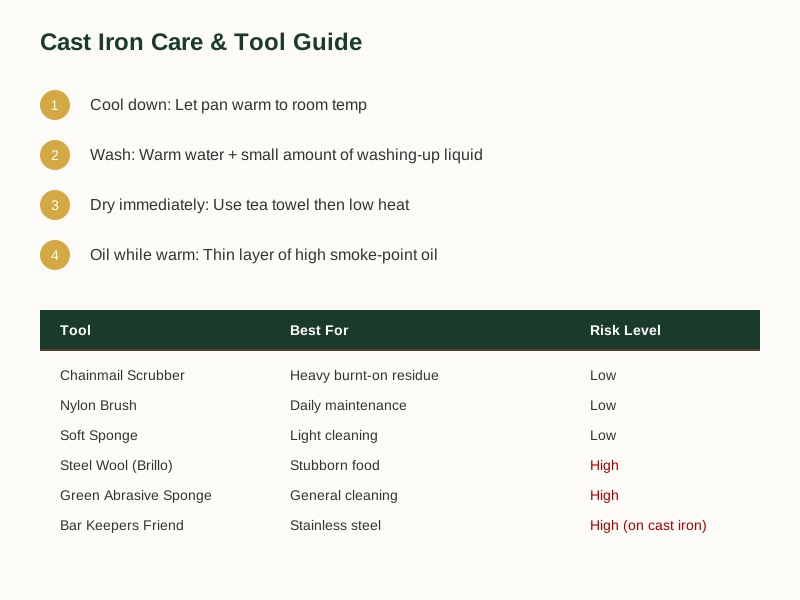
Cool the pan. Before washing, let the pan sit until it’s warm to the touch rather than scalding hot. This prevents thermal stress.
Wash with care. Use warm water and a modest amount of washing-up liquid. A soft nylon brush, sponge, or a dedicated chainmail scrubber (paid link)See on Amazon for tougher residue will clean effectively without being abrasive. The focus should be on removing food particles, not on scrubbing the seasoning itself.
Dry thoroughly and immediately. This is the most vital step. Do not air-dry the pan. Dry it completely with a towel, then place it over low heat on the hob for a minute or two to evaporate any lingering moisture. This ensures the iron is completely dry.
Apply a protective coat of oil. While the pan is still warm from drying, wipe a very thin layer of a high smoke-point oil (like rapeseed (paid link)See on Amazon or sunflower oil) over the cooking surface. The residual heat helps the oil bond, maintaining the seasoning.
This routine, performed consistently, keeps a cast iron pan in excellent condition. The use of soap is a minor part of the process; the diligence in drying and oiling is what truly protects the pan.
For a handy reminder of these steps, Download the Free Pan Rescue First-Steps Checklist .
Choosing the Right Tools
Selecting appropriate tools makes cleaning easier and safer for your pan.
Chainmail scrubbers are highly effective for removing stuck-on food without damaging the seasoning. The flexible metal rings conform to the pan’s surface and lift residue efficiently. Look for models with a comfortable handle.
Washing-up brushes (paid link)See on Amazon and soft sponges are perfectly adequate for everyday cleaning after most cooks. They provide enough agitation for light cleaning without the abrasiveness that can harm the seasoning.
It’s best to avoid steel wool pads and the abrasive green side of common kitchen sponges. These are too harsh and can scratch the seasoning. Similarly, abrasive cleaning powders like Bar Keepers Friend are designed for harder surfaces like stainless steel and are not recommended for seasoned cast iron, as they can wear down the protective layer.
Addressing Stubborn Residue and Rust
Sometimes, a simple wash isn’t enough. For burnt-on food, a brief soak of 10-20 minutes in warm, soapy water can help loosen the residue. After soaking, scrub gently. Avoid prolonged soaking, as it increases the risk of rust, especially on less resilient seasoning.
📺 Watch: This Simple Homemade Mix Completely Removes Rust
If surface rust has already appeared, it can often be removed with a nylon brush and washing-up liquid. Scrub the affected area, then dry and oil the pan immediately as described in the main routine. If the rust is extensive or has pitted the surface, a full reseasoning process may be necessary.
For enameled cast iron cookware (like Le Creuset or Staub), the rules differ slightly. The vitreous enamel surface is non-porous and not prone to rust. Manufacturers often permit soaking for stubborn messes, but abrasive tools should still be avoided to prevent scratching the glossy finish.
Common Questions Answered
Can you put cast iron in the dishwasher?
No. The combination of harsh detergent and prolonged high heat in a dishwasher will damage the seasoning and promote rust. Cast iron should always be washed by hand.
What if my cast iron pan is already rusty?
Light surface rust can be scrubbed off with a nylon brush and washing-up liquid. After scrubbing, dry the pan thoroughly on the hob and apply a thin coat of oil. For heavy rust that has pitted the metal, the pan may need to be stripped and fully reseasoned.
Does washing-up liquid remove the seasoning?
A small amount of modern washing-up liquid is generally unlikely to harm a properly bonded, cured seasoning layer. The primary risks to seasoning come from abrasion and moisture, not from surfactants.
How do I know if my seasoning is stripped?
Signs of compromised seasoning include a patchy, dull appearance, a rough texture, or food sticking persistently to certain areas. A healthy surface is typically dark, smooth, and slick.
Can I use vinegar to clean cast iron?
Vinegar is acidic and can be used cautiously for rust removal, but it may also damage seasoning if left in contact for too long. For general cleaning, washing-up liquid is the safer choice. If using vinegar, rinse the pan thoroughly immediately afterward and follow with complete drying and oiling.
Tool Comparison
| Tool | Best For | Risk Level |
|---|---|---|
| Chainmail Scrubber | Stubborn, burnt-on food | Low |
| Nylon Brush | Everyday cleaning | Low |
| Soft Sponge | Light maintenance | Low |
| Steel Wool | Avoid on cast iron | High |
| Abrasive Sponge | Avoid on cast iron | High |
| Abrasive Cleaners | Best for other surfaces | High |
Final Advice
The answer is clear: yes, you can use washing-up liquid on a well-seasoned cast iron pan. The critical factor is the condition of the seasoning itself. A robust, cured surface will not be harmed by a brief wash with diluted detergent. No special rinsing or neutralising step is required. The real safeguards are immediate, thorough drying and occasional oiling.
If your pan’s seasoning is not yet fully cured or is in poor condition, focus on restoring that protective layer first. Our guide How to Season a Cast Iron Pan (and When to Re-Season) provides detailed instructions for this process.
Download the Free Pan Rescue First-Steps Checklist to keep the essential cleaning and maintenance steps handy.
Related Reading
Sources & Further Reading
Note: General guidance only, verify details with a qualified professional or official source.