Is It Worth Cleaning a Burnt Non-Stick Pan?
As an Amazon Associate we earn from qualifying purchases. Some links on this page are affiliate links, which means we may earn a small commission if you make a purchase.
The question of whether a burnt non-stick pan is worth cleaning comes down to one thing: is the coating still properly bonded to the pan, or has the damage gone deeper than surface-level burnt food? The appearance of the burn matters less than the integrity of the non-stick layer underneath.
If the coating remains smooth and continuous, cleaning is worthwhile. If it’s lifting or flaking, no amount of scrubbing will restore it—the pan needs replacing. This distinction saves you from wasting effort on a lost cause or, worse, damaging a salvageable pan with the wrong cleaning approach.
Assessing Coating Integrity
Before reaching for any cleaner, assess the pan’s actual condition. Hold it under a bright light and run your fingertips across the cooking surface. Feel for texture changes.
- A surface that feels uniformly slick beneath the burnt residue suggests the coating is intact.
- Any roughness, bubbling, or areas where your fingernail catches indicate coating failure.
- Visible bare metal through scratches means the pan’s protective layer is compromised.
This assessment takes seconds but determines everything. A pan with a sound coating is dirty, not dead. One with a failing coating is beyond cleaning.
Why Abrasive Tools Cause Damage
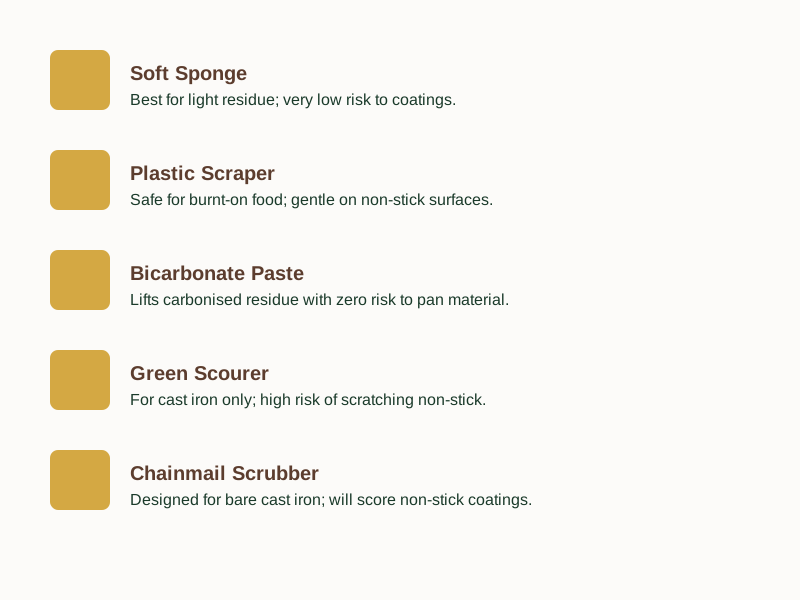
Many non-stick coatings can be scratched or damaged by abrasive tools. The very property that makes them non-stick—their smooth, low-friction surface—also makes them vulnerable. Abrasive scourers, even common green ones, contain grit designed to cut through tough residue on harder materials like cast iron or stainless steel. On a non-stick pan, this same action scratches the delicate coating.
A heavy-duty scrub sponge works well on appropriate surfaces but is unsuitable for non-stick interiors. Similarly, chainmail scrubbers, excellent for bare cast iron, will score a PTFE coating. The goal is always to remove the burnt food without harming the coating beneath.
The Safe Cleaning Method for Intact Coatings
For a pan with a confirmed intact coating, a bicarbonate of soda paste offers a safe, effective clean.
Make a thick paste with bicarbonate of soda (paid link)See on Amazon and water. Apply it to cover the burnt areas and leave for about half an hour. The paste helps loosen the carbonised residue. After waiting, gently agitate the area with a soft plastic sponge or a plastic scraper. The residue should lift away without requiring abrasive force. Rinse thoroughly.
This method works because it targets the burnt food without attacking the coating. It will not, however, repair a coating that is already scratched or failing.
Now you know what to look for—Download the Free Pan Rescue First-Steps Checklist to keep the decision logic at your elbow next time you’re standing at the sink.
Considering Other Cleaners
Products like Bar Keepers Friend and The Pink Stuff are formulated for hard, durable surfaces like stainless steel and enamel. Their effectiveness often comes from mild abrasives. Using them on a non-stick interior risks hazing or scratching the delicate coating.
📺 Watch: how to clean burnt non-stick and other pans how to clean …
If a product’s label does not explicitly state it is safe for non-stick surfaces, or if the pan manufacturer advises against it, choose a different method. For a burnt non-stick pan with an intact coating, the bicarbonate paste is the safer option.
Common Questions Answered
My non-stick pan is flaking. What now?
If the coating is badly flaking, scratched, or worn, replacement may be necessary. A flaking coating represents a structural failure; it will not magically re-adhere. Continuing to use it compromises cooking performance and may not be advisable. Follow the pan manufacturer’s guidance on replacement.
Is dishwasher cleaning acceptable for non-stick pans?
Some non-stick pans are dishwasher safe, but check the manufacturer’s instructions. Even for dishwasher-safe items, hand washing is generally recommended to preserve the coating’s appearance and non-stick properties over the long term. Regular dishwashing may eventually affect the release properties of some cookware.
How can I prevent burning in the future?
Using excessive heat is a common cause of burning. Non-stick coatings perform optimally at low to medium temperatures. Avoid preheating an empty pan for extended periods and never leave a pan unattended on a active hob. Using appropriate fats and not overcrowding the pan also helps prevent food from sticking and burning.
Tool Suitability at a Glance
| Tool | Best For | Risk to Non-Stick |
|---|---|---|
| Soft Sponge | Light residue | Low |
| Plastic Scraper | Burnt-on food | Low |
| Bicarbonate Paste | Carbonised residue | None |
| Abrasive Scourer | Cast Iron | High (Scratches coating) |
| Chainmail Scrubber | Bare Cast Iron | High (Scores coating) |
| Bar Keepers Friend | Stainless Steel | Moderate (Hazes coating) |
Your Next Step After a Gentle Clean
After attempting a gentle clean, reassess the pan. If the coating feels smooth and intact after the burnt residue is gone, the pan is likely fine to continue using. If the cleaning reveals lifting, flaking, or rough patches where the coating has failed, it’s time to consider replacement. For detailed criteria on when a non-stick pan is beyond saving, our guide on Non-Stick Pan Rescue: When to Save It and When to Bin It provides a thorough breakdown.
The free checklist below gives you a quick reference for these steps, so you can make a confident decision without second-guessing.
Download the Free Pan Rescue First-Steps Checklist
Related Guides
For a complete overview, see our Non-Stick Pan Rescue: When to Save It and When to Bin It .
Sources & Further Reading
- How to Clean a Burnt Pan: easy Methods That Actually Work
- How to Clean Nonstick Pans | Our Place | Always Pan
- How to Clean Non-stick Pans | Tefal UK Shop
As an Amazon Associate we earn from qualifying purchases. The products linked above are ones we think are worth a look.
Note: General guidance only, verify details with a qualified professional or official source.